
Tokyo
Marathon
The youngest of the original six Majors, and the one that joined with the slowest course records in the series. Thirteen years later the men's record is 2:02:16 and the women's, set by Brigid Kosgei in March 2026, is 2:14:29.
The Tokyo Marathon is the youngest of the six races that formed the World Marathon Majors before 2025: first run on 18 February 2007, admitted to the series in 2013 as its first race in Asia, and held every year in late February or early March, from Shinjuku to Tokyo Station.
When it joined, its course records were the slowest of all the Majors. Since then the men's has fallen four times, to Benson Kipruto's 2:02:16 (2024), and the women's seven times, to Brigid Kosgei's 2:14:29 (2026). Tadese Takele won the men's race in 2025 and 2026. Like every Major, it is raced in sponsor kit — the universe our brand shelves collect.
Part of our Competition Files — one competition at a time, explained. Start from the hub: the Abbott World Marathon Majors explained, or jump to the sponsor lines.
- What it is
- An Abbott World Marathon Major since 2013 — the first in Asia, run from Shinjuku to Tokyo Station in late February or early March
- First race
- 18 February 2007 — won by Daniel Njenga (2:09:45) and Hitomi Niiya (2:31:01)
- Joined the Majors
- Announced 2 November 2012; first edition as a Major on 24 February 2013, the sixth race in the series
- Course record, men
- 2:02:16 — Benson Kipruto, 3 Mar 2024, 24 s inside Eliud Kipchoge's 2:02:40 of 2022
- Course record, women
- 2:14:29 — Brigid Kosgei, 1 Mar 2026, 86 s inside Sutume Asefa Kebede's 2:15:55 of 2024
- 2026 winners
- Tadese Takele 2:03:37 (second title in a row, in a sprint) and Brigid Kosgei 2:14:29
- Records cut since joining
- −4:34 men (from 2:06:50) and −10:59 women (from 2:25:28) — the slowest Major course records in 2014
- Race partner
- Asics, a sponsor since the first edition in 2007; the elite field races in its own sponsor kit
Two Old Races, One New One
Tokyo had elite marathons long before it had this one. From 1979 to 2008 the city held the Tokyo International Women's Marathon, the first marathon for women sanctioned by the sport's governing body, and for the men there was the Tokyo International Marathon. Both were small fields of invited runners. What the city did not have was a race for everyone.
That changed on 18 February 2007. The first Tokyo Marathon started at the Metropolitan Government Building in Shinjuku, doubled as a selection race for that summer's World Championships in Osaka, and was won by Daniel Njenga of Kenya in 2:09:45 and Hitomi Niiya of Japan in 2:31:01. The women's international race ran one more time, in November 2008, and then left for Yokohama: Tokyo had one marathon now, and it was the big one.
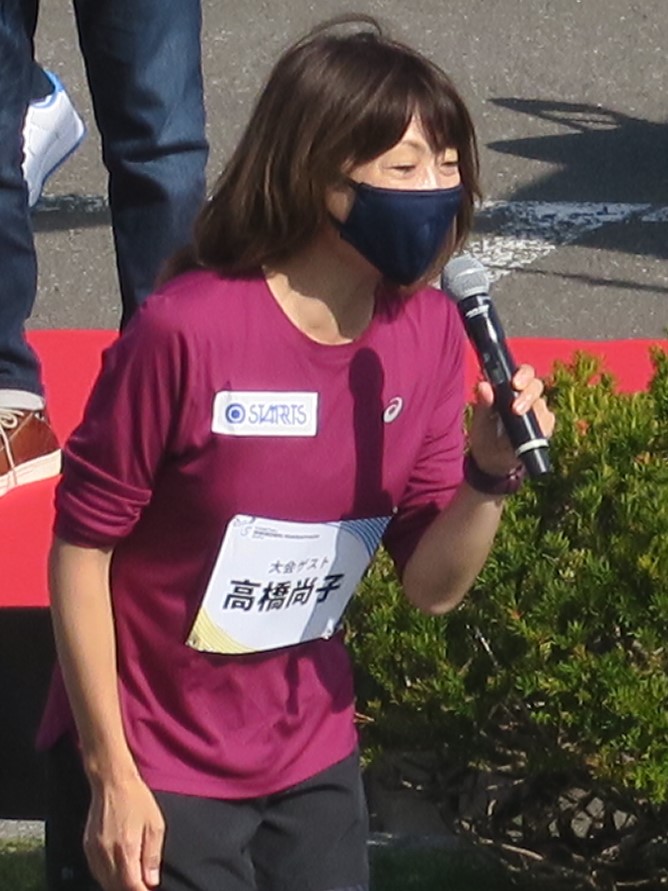
The country it grew out of takes the distance more seriously than almost any other. Japan won Olympic marathon gold with Naoko Takahashi in Sydney in 2000 and with Mizuki Noguchi in Athens four years later, and its corporate teams and university ekiden relays are the backbone of the sport there. The full story is in our history of athletics in Japan.
The Sixth Major, and the First in Asia
On 2 November 2012 the World Marathon Majors announced that Tokyo would join Boston, London, Berlin, Chicago and New York. It was the first new race since the series began in 2006 and the first in Asia, and it made its debut on 24 February 2013, in its seventh edition, as the opening race of the 2013–14 scoring period. Twelve years later the series grew again, with Sydney in 2025, and Cape Town is due to join in May 2027.
Joining was the easy part. When World Athletics previewed the 2014 race, it pointed out that Tokyo's course records — 2:06:50 by Dennis Kimetto in 2013 and 2:25:28 by Atsede Habtamu in 2012 — were the slowest of all the Majors. The new member had the crowds and the organisation. It did not yet have the times.
Thirteen Years of Tightening
It got the times. Dickson Chumba took more than a minute off the men's record in 2014, and Tirfi Tsegaye cut the women's by more than three minutes in the same race. In 2017 Wilson Kipsang ran 2:03:58, almost two minutes better than Chumba and at that point the fastest marathon ever run in Asia. On the women's side the record fell in 2016, 2017 and 2020, when Lonah Chemtai Salpeter of Israel won in 2:17:45.
Hover or tab on a tooth for the detail. Tooth height is proportional to the seconds cut; the tallest is Tirfi Tsegaye's 185 seconds in 2014. Sources: World Athletics race reports 2014, 2020, 2022, 2024 and 2026; World Marathon Majors; LetsRun. Verified October 2026.
Every Tokyo Marathon course record since 2012 — and how much each one cut
| Year | Race | Athlete | Mark | Cut |
|---|---|---|---|---|
| 2013 | Men | Dennis Kimetto | 2:06:50 | Starting point (slowest Major course record in 2014) |
| 2014 | Men | Dickson Chumba | 2:05:42 | −68 s |
| 2017 | Men | Wilson Kipsang | 2:03:58 | −104 s |
| 2022 | Men | Eliud Kipchoge | 2:02:40 | −78 s |
| 2024 | Men | Benson Kipruto | 2:02:16 | −24 s · current record |
| 2012 | Women | Atsede Habtamu | 2:25:28 | Starting point (slowest Major course record in 2014) |
| 2014 | Women | Tirfi Tsegaye | 2:22:23 | −185 s |
| 2016 | Women | Helah Kiprop | 2:21:27 | −56 s |
| 2017 | Women | Sarah Chepchirchir | 2:19:47 | −100 s |
| 2020 | Women | Lonah Chemtai Salpeter | 2:17:45 | −122 s |
| 2022 | Women | Brigid Kosgei | 2:16:02 | −103 s |
| 2024 | Women | Sutume Asefa Kebede | 2:15:55 | −7 s |
| 2026 | Women | Brigid Kosgei | 2:14:29 | −86 s · current record |
Every tooth on the chart is a record that held until someone beat it on the same streets, and the counter on the right is the sum. Since joining the Majors, Tokyo's men's record has come down by 4 minutes 34 seconds and the women's by 10 minutes 59 seconds. The women's mark is now 25 seconds slower than the 2:14:04 Brigid Kosgei ran in Chicago in 2019, the world record of its day.
Kipchoge's Spring, Kosgei's Two Visits
The pandemic took two springs from the race. In 2020 only about 200 elite runners started. The 2021 edition was moved to October and then to 6 March 2022, which meant the 2022 edition was cancelled and its date given to the delayed race; overseas amateurs still could not enter. The elite fields were another matter. Eliud Kipchoge, then of the NN Running Team, won in 2:02:40, a course record and the fastest marathon run in Japan up to then, with Amos Kipruto second in 2:03:13.
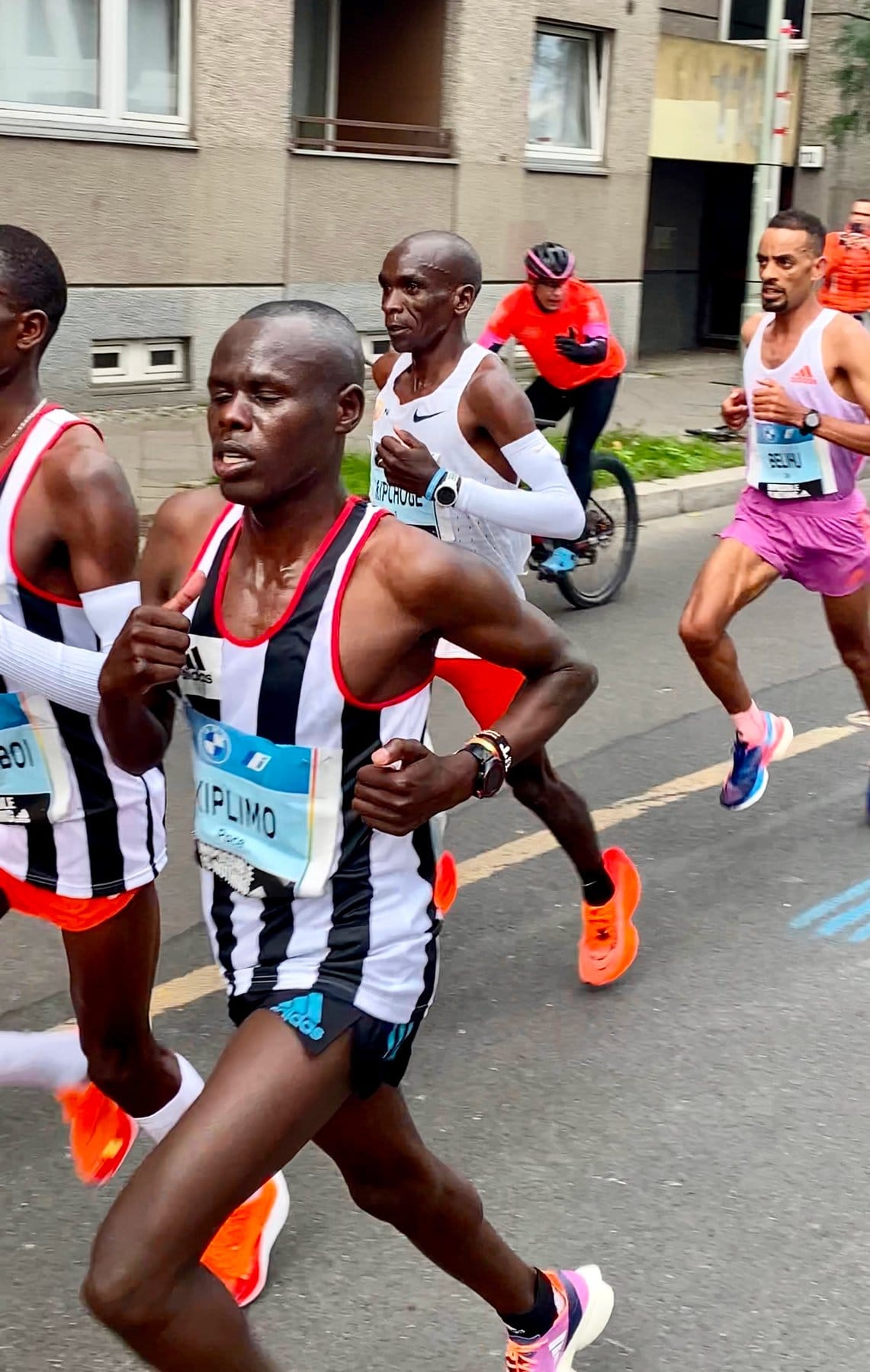
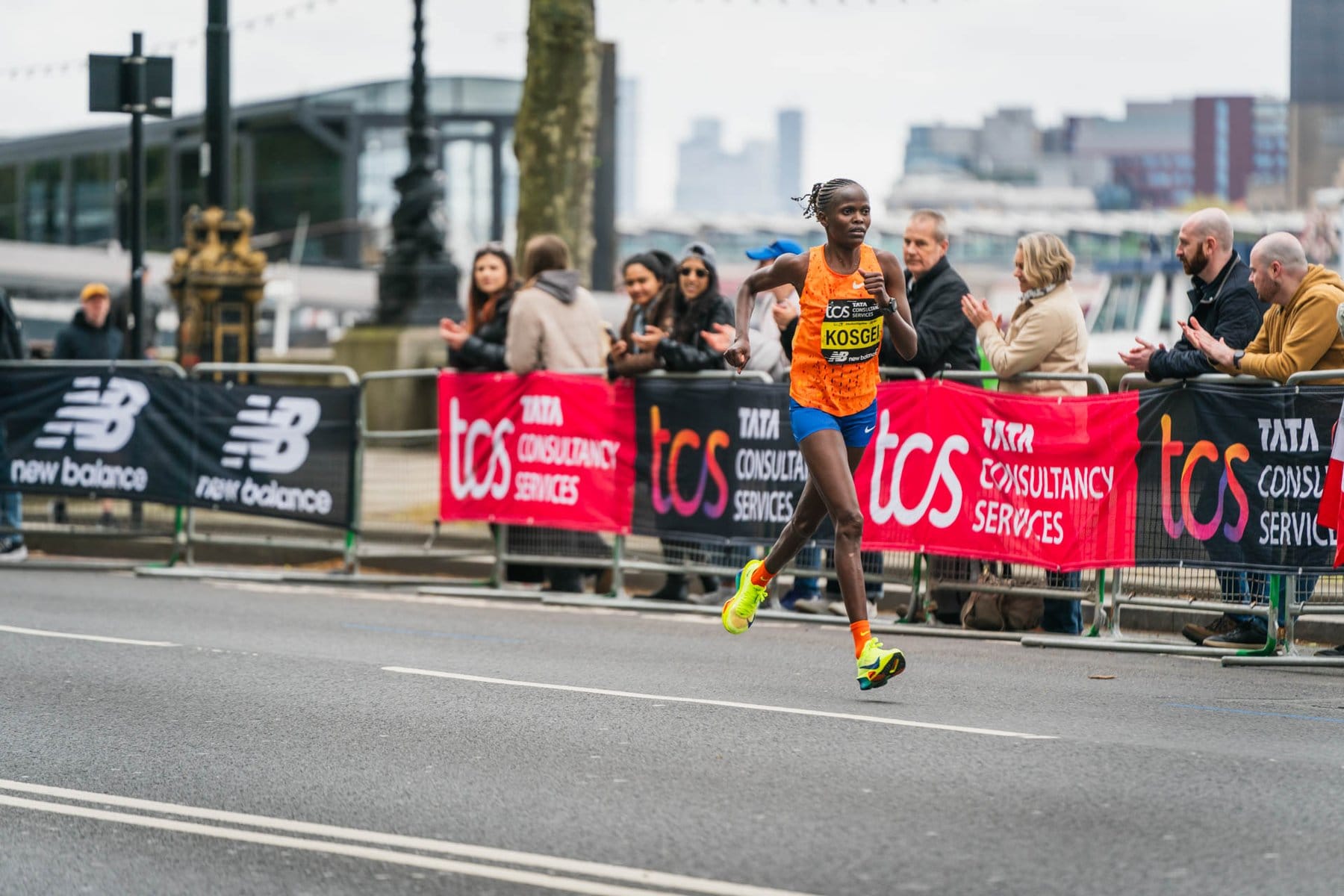
Brigid Kosgei won the women's race that day in 2:16:02, also a course record. Two years later Kipchoge came back and finished tenth in 2:06:50 while Benson Kipruto ran 2:02:16, the men's record that still stands, and Sutume Asefa Kebede beat Kosgei's time by seven seconds. Kebede won again in 2025, the first woman to win Tokyo two years in a row.
On 1 March 2026 Kosgei returned and ran 2:14:29, 86 seconds inside Kebede's record and her fastest marathon since her world record in 2019. It was her second Tokyo title and her sixth Major. Kosgei, formed at the Kapsait camp of the Rosa & Co. group, announced in January 2026 that she plans to run for Türkiye at the Los Angeles Games.
Shinjuku to Tokyo Station
The course in use today dates from 2017. Announcing it in April 2016, the organisers said they wanted two things: to show more of the city, and to make the race faster. It still starts at the Metropolitan Government Building in Shinjuku, but instead of heading out to Tokyo Big Sight on the bay it now runs through Iidabashi, Kanda, Nihonbashi, Asakusa, Ryogoku, Ginza, Takanawa and Hibiya and finishes on Gyoko-dori, the avenue in front of Tokyo Station. Kipsang's 2:03:58 came in its first year.
The two most recent men's races show what the field looks like now. Tadese Takele of Ethiopia won his first Major here in 2025 in 2:03:23, and on 1 March 2026 he defended it in a sprint: 2:03:37, the same time as Geoffrey Toroitich, with Alexander Mutiso a second behind and seven seconds covering the first five. The best Japanese man was Suguru Osako, twelfth in 2:05:59 — six years after he ran 2:05:29 on this course, a national record at the time.
Sponsor Kit, and a Home Brand
The house rule for reading any race: championships mean federation kit, and the Majors mean sponsor kit. In Tokyo the leaders wear the uniforms of their shoe contracts and their management groups, not their national colours. The race has its own partner on top of that: Asics, the Kobe company that put Takahashi in a racing shoe of about 95 grams for Sydney, has sponsored the Tokyo Marathon since the first edition in 2007. Its full story is on our Asics Pro Elite page.
 Race-day partner · in the archiveAsics Pro Elite 2024 Team Distance Singlet – Yellow EditionAthlete-issued Asics team kit from 2024, in the yellow of that Olympic year. Asics has backed the Tokyo Marathon since its first edition in 2007.120,00 €View piece →
The other lines behind the Tokyo podiums each have their own page here — Rosa & Co., NN Running, Nike Pro Elite and adidas Pro Elite — and the rail below holds one athlete-issued piece from each, plus Asics. For the oldest race in the series, the opposite end of the calendar, see Boston.
The Uniforms of Gyoko-dori
Tokyo is raced in trade kit, not national kit. These are athlete-issued pieces from five of the lines in the archive — starting with Asics, the race's partner since 2007.
 Asics Pro Elite 2024 Team Women Crop Top – Yellow Edition90,00 €View Piece →Rosa & Co.
 Nike Rosa & Co. Pro Elite Team 2022 Half Zip Jersey200,00 €View Piece →NN Running
 Nike NN Running Team Pro Elite 2022 Arm Sleeves150,00 €View Piece →Nike Pro Elite
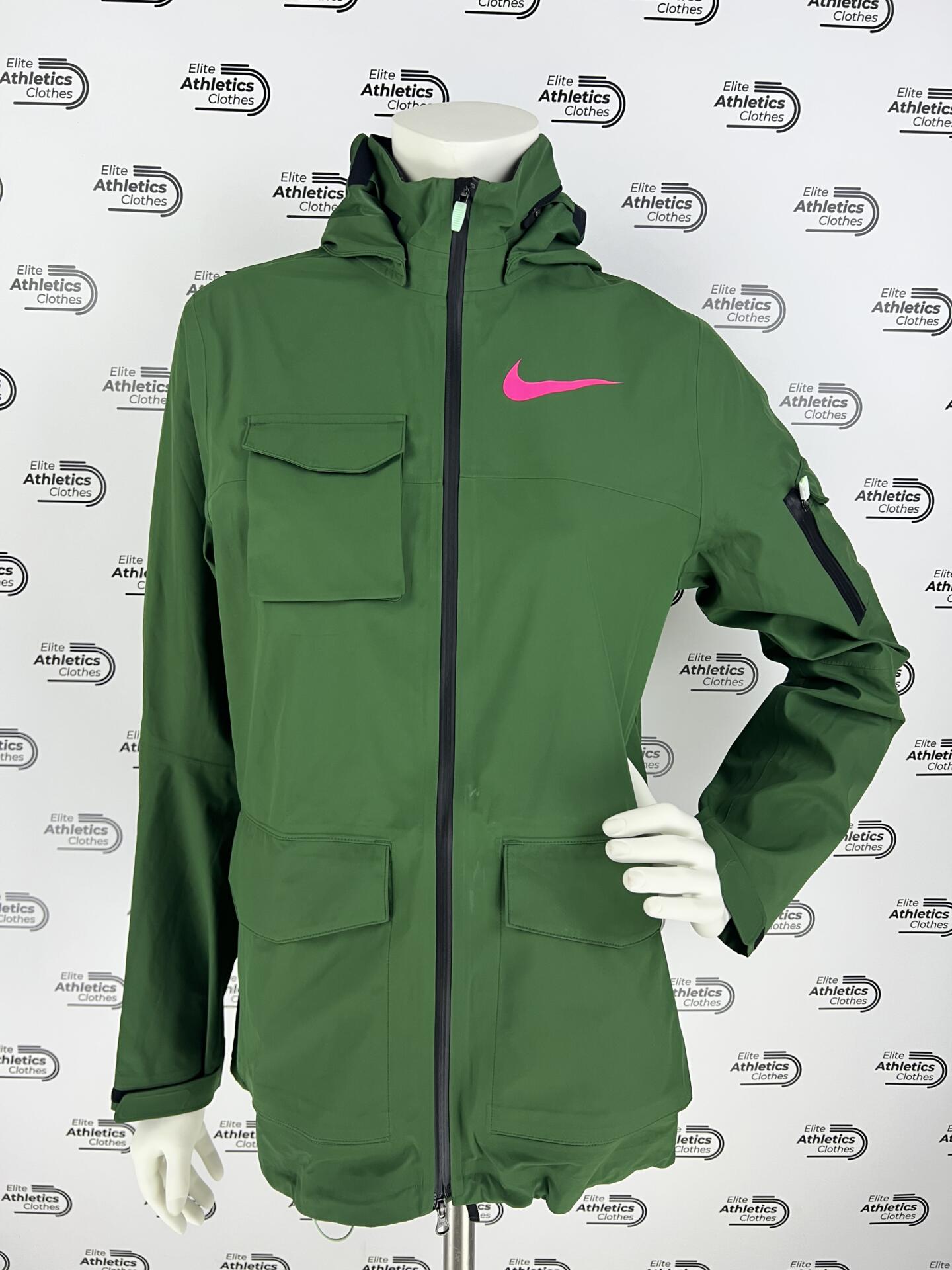 Nike Pro Elite 2023 Women Storm Fit Jacket150,00 €View Piece →adidas
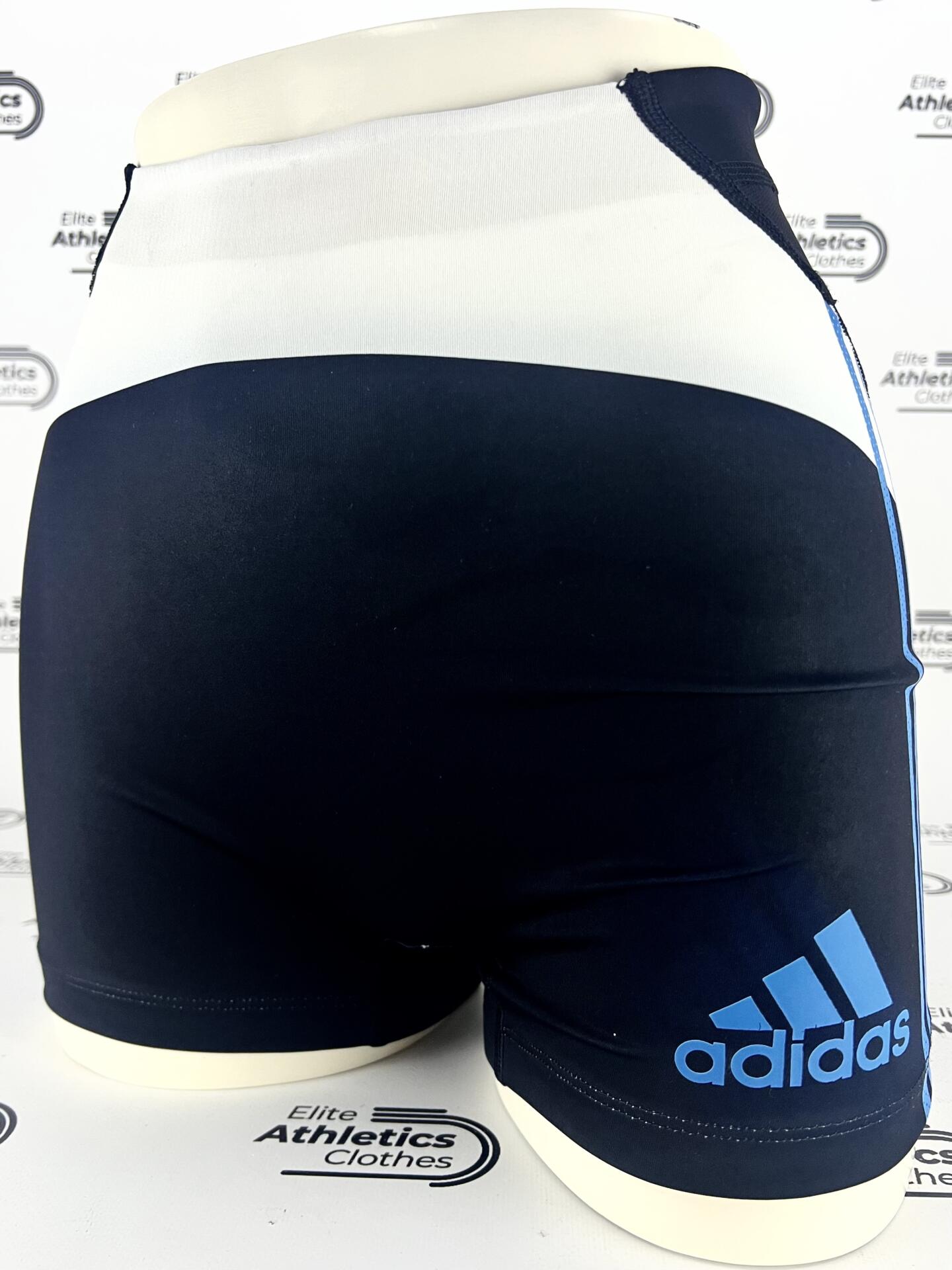 Adidas Pro Elite 2022 Women Booty Short Tights100,00 €View Piece →
Who won the 2026 Tokyo Marathon?
Tadese Takele of Ethiopia won the men's race on 1 March 2026 in 2:03:37, defending his title in a sprint finish with Geoffrey Toroitich given the same time. Brigid Kosgei won the women's race in 2:14:29, a course record, ahead of Bertukan Welde and Hawi Feysa.
What are the Tokyo Marathon course records?
The men's course record is 2:02:16, set by Benson Kipruto on 3 March 2024. The women's is 2:14:29, set by Brigid Kosgei on 1 March 2026. Neither is a world record; World Athletics lists them as all-comers' records for Japan and Asia.
When did the Tokyo Marathon become a World Marathon Major?
The addition was announced on 2 November 2012, and the race on 24 February 2013 was its first as a Major. Tokyo was the sixth race in the series, after Boston, London, Berlin, Chicago and New York, and the first in Asia.
When was the first Tokyo Marathon?
On 18 February 2007. Daniel Njenga of Kenya won the men's race in 2:09:45 and Hitomi Niiya of Japan the women's in 2:31:01. Before that, Tokyo held separate elite marathons, including the Tokyo International Women's Marathon from 1979 to 2008.
Is the Tokyo Marathon course fast?
Yes. The current course, in use since 2017, runs from the Metropolitan Government Building in Shinjuku to Gyoko-dori in front of Tokyo Station and was redesigned partly to be faster. Since 2013 the men's course record has dropped by 4:34 and the women's by 10:59.
Sources and References
- World Athletics — Tokyo Marathon 2026 report (1 Mar 2026) — Kosgei 2:14:29 and Takele 2:03:37
- LetsRun — 2026 Tokyo Marathon results — the sprint finish and the top Japanese placings
- Athletics Weekly — Brigid Kosgei wins Tokyo Marathon in 2:14:29 — the women's course record
- Citizen Digital — Kosgei smashes course record in Tokyo — Kosgei's plan to represent Türkiye
- NBC Sports — Tokyo Marathon results 2025 — Takele 2:03:23 and Kebede's back-to-back win
- Olympics.com — Benson Kipruto wins in a record 2:02:16 — the men's course record and Kipchoge's tenth place
- World Athletics — Kipchoge and Kosgei, Tokyo 2022 report — the 2:02:40 and 2:16:02 of 6 March 2022
- World Athletics — Tokyo Marathon 2020: Legese, Salpeter, Osako — Salpeter's 2:17:45 and the 2:19:47 before it
- LetsRun — 2016 Tokyo Marathon recap — Kiprop's 2:21:27
- World Marathon Majors — Kipsang smashes records in Tokyo (2017) — the 2:03:58 on the new course
- World Athletics — Tokyo Marathon preview (21 Feb 2014) — the slowest course records among the Majors
- World Marathon Majors — Tokyo Marathon joins the series — the 2012 announcement
- Tokyo Marathon — results of the 2007 race — the first edition and its winners
- Tokyo Marathon — the new course for 2017 — the route from Shinjuku to Tokyo Station
- Nippon.com / Reuters — Tokyo Marathon postponed, 2022 edition cancelled — the pandemic calendar