
Commonwealth
Games
A championship with no Great Britain team, para athletes on the same medal table since 2002, and two of the most famous middle-distance races ever run. Twenty-three Games since 1930 — none of them in Africa.
Athletics at the Commonwealth Games is the track and field programme of the four-yearly multi-sport Games of the Commonwealth: held at every edition since Hamilton 1930, with England, Scotland, Wales and Northern Ireland competing as separate teams and para athletics fully integrated since Manchester 2002.
The most recent Games were in Glasgow, 23 July to 2 August 2026, where Australia topped the athletics table with 34 medals and Emmanuel Eseme of Cameroon ran a Games record 9.83 in the 100 m. The next, the centenary edition, goes to Ahmedabad in 2030. It is a championship, so it is raced in federation kit — the universe our country archive collects.
Part of our Competition Files — one competition at a time, explained. Compare it with the European Championships, or jump to the federation kit.
- What it is
- The athletics and para athletics programme of the Commonwealth Games, a multi-sport championship held every four years
- First Games
- Hamilton, Canada, 1930, as the British Empire Games; athletics at every edition since
- Games held
- 23 from 1930 to 2026; 1942 (Montreal) and 1946 (Cardiff) cancelled by the war; none in Africa
- Teams
- 74 in 2026; England, Scotland, Wales and Northern Ireland enter separately — there is no Great Britain team
- Para athletics
- Fully integrated into national teams since Manchester 2002, the first multi-sport Games to do it
- Latest Games
- Glasgow, 23 Jul – 2 Aug 2026: ten sports, athletics at Scotstoun Stadium from 27 July to 1 August
- Glasgow 2026 athletics
- Australia top, 34 medals (12 gold), a third straight win; Eseme 9.83 Games record in the 100 m
- Next Games
- Ahmedabad, India, 2030 — the centenary edition, awarded on 26 November 2025, athletics confirmed
One Championship, 74 Flags
The Commonwealth Games are a multi-sport championship held every four years for the nations and territories of the Commonwealth, and athletics has been on the programme at every edition since the first, in Hamilton, Canada, in 1930. The Commonwealth itself has 56 member states; 74 teams took part in Glasgow in 2026, because dependent territories such as the Isle of Man enter under their own flags.
The detail that surprises people from outside: there is no Great Britain team. England, Scotland, Wales and Northern Ireland enter separately, so athletes who share a relay baton at the Olympic Games and the World Championships line up against each other here. Australia finished top of the athletics table in 2018, 2022 and 2026.
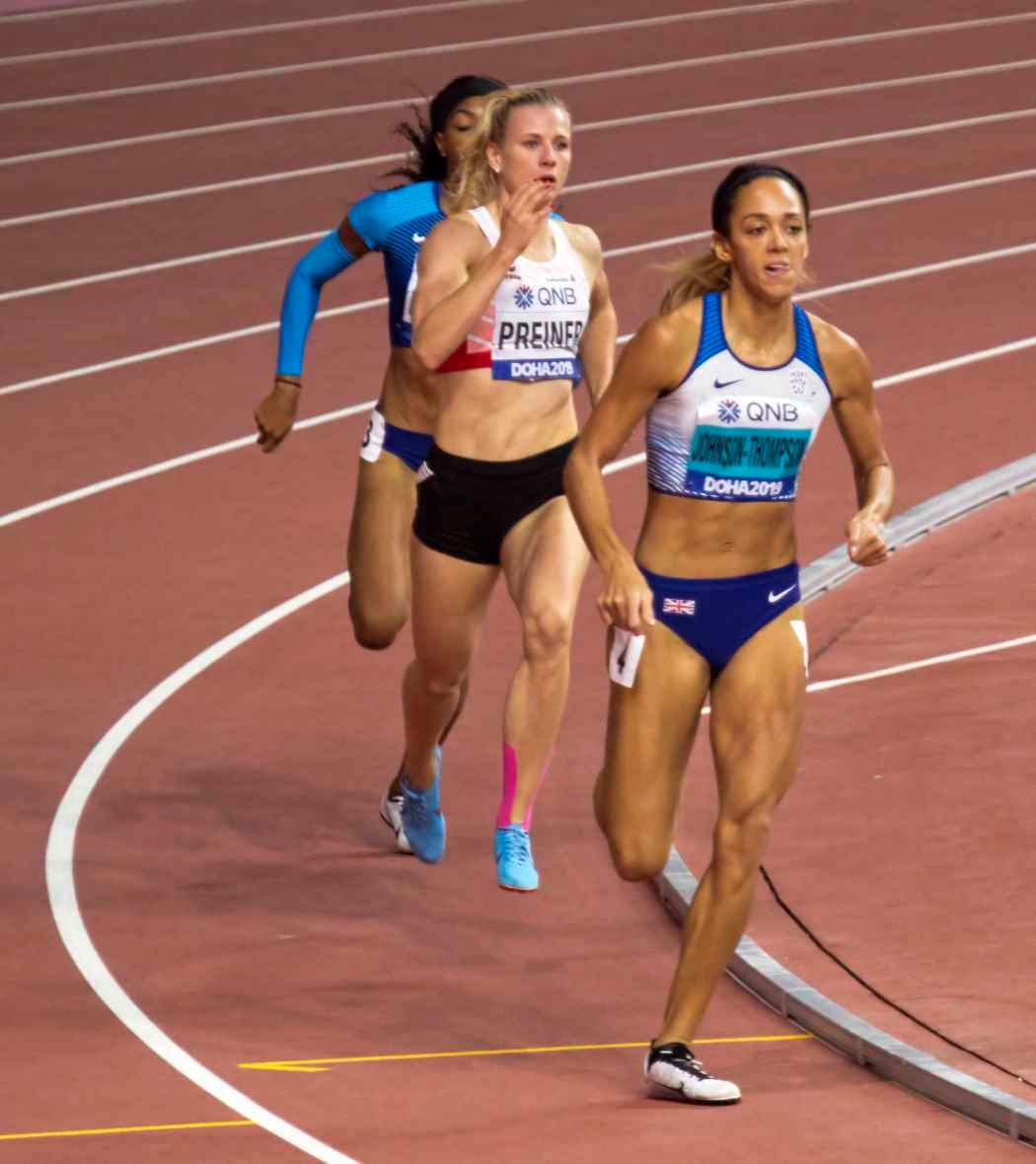
The Games were also the first major multi-sport event to put para athletes inside their national teams. Para events appeared as exhibitions in Victoria in 1994; from Manchester 2002 they were full medal events, with para athletes on the same teams and the same medal table. Glasgow 2026 had 47 para medal events across six sports, a record for the Games.
Two Races That Changed the Sport
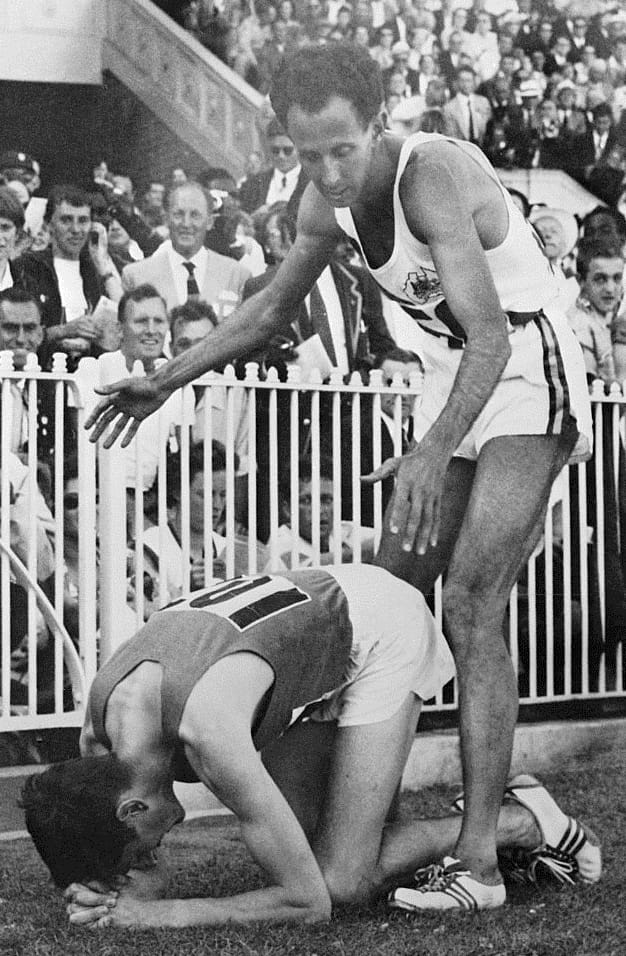
Two of the most famous middle-distance races ever run were Commonwealth finals. On 7 August 1954 in Vancouver, Roger Bannister of England and John Landy of Australia met in the mile, three months after Bannister had first broken four minutes in Oxford and a few weeks after Landy had taken the world record to 3:58.0 in June. Bannister passed Landy on the last bend and won in 3:58.8; Landy was second, and for the first time two men had run under four minutes in the same race. Bannister died in 2018 and Landy, later Governor of Victoria, in 2022.
Twenty years later, on 2 February 1974 in Christchurch, Filbert Bayi of Tanzania led the 1500 m from the gun and never gave it up. He won in 3:32.2, a world record that took almost a second off Jim Ryun's 3:33.1 of 1967, and John Walker of New Zealand, second, also ran inside the old mark. Bayi's time stayed the Games record for 48 years, until Oliver Hoare of Australia won in Birmingham in 2022 in 3:30.12.
The mile came back to the programme in Glasgow in 2026 for the first time since 1966, as a tribute to Bannister's race. Scotland's Josh Kerr won it in 3:54.12. For the other great mile tradition, see the Bislett Games and the Dream Mile.
Twenty-Three Games, Never in Africa
The Games move every four years, and the chart below pins each edition to the region that held it. Canada staged the first one and four more; the United Kingdom and Australia with New Zealand have held eight each; Asia two, in Kuala Lumpur in 1998 and Delhi in 2010. The 1942 Games, awarded to Montreal, and the 1946 Games, awarded to Cardiff, were cancelled because of the Second World War.
Hover or tab on a pin for the detail. The shaded band marks the war years. Sources: Commonwealth Sport and Top End Sports host lists; SwimSwam and SBS on Durban (2017); Wikipedia on Victoria 2026; World Athletics on Ahmedabad 2030. Verified October 2026.
Every Commonwealth Games host, by region — including the Games that never happened
| Year | City | Region | Status |
|---|---|---|---|
| 1930 | Hamilton | Canada & Jamaica | Held · The first Games, as the British Empire Games |
| 1934 | Johannesburg | Africa | Awarded, then moved to London |
| 1934 | London | United Kingdom | Held · Moved here from Johannesburg |
| 1938 | Sydney | Australia & New Zealand | Held |
| 1942 | Montreal | Canada & Jamaica | Awarded, cancelled by the Second World War |
| 1946 | Cardiff | United Kingdom | Awarded, cancelled by the Second World War |
| 1950 | Auckland | Australia & New Zealand | Held |
| 1954 | Vancouver | Canada & Jamaica | Held · Bannister and Landy both run under four minutes in the mile |
| 1958 | Cardiff | United Kingdom | Held |
| 1962 | Perth | Australia & New Zealand | Held |
| 1966 | Kingston | Canada & Jamaica | Held · The only Games held in the Caribbean |
| 1970 | Edinburgh | United Kingdom | Held |
| 1974 | Christchurch | Australia & New Zealand | Held · Filbert Bayi's 1500 m world record, 3:32.2 |
| 1978 | Edmonton | Canada & Jamaica | Held |
| 1982 | Brisbane | Australia & New Zealand | Held |
| 1986 | Edinburgh | United Kingdom | Held · Edinburgh's second Games |
| 1990 | Auckland | Australia & New Zealand | Held · Auckland's second Games |
| 1994 | Victoria | Canada & Jamaica | Held · Para events first appear, as exhibitions |
| 1998 | Kuala Lumpur | Asia | Held · The first Games in Asia |
| 2002 | Manchester | United Kingdom | Held · Para athletes fully integrated into national teams |
| 2006 | Melbourne | Australia & New Zealand | Held |
| 2010 | Delhi | Asia | Held · Moses Kipsiro's 5000 and 10,000 m double |
| 2014 | Glasgow | United Kingdom | Held |
| 2018 | Gold Coast | Australia & New Zealand | Held · Cheptegei's 5000 and 10,000 m double |
| 2022 | Durban | Africa | Awarded, then withdrawn in March 2017; moved to Birmingham |
| 2022 | Birmingham | United Kingdom | Held · Taken on after Durban lost the Games |
| 2026 | Glasgow | United Kingdom | Held · Ten sports, athletics kept; Victoria had withdrawn |
| 2030 | Ahmedabad | Asia | Awarded in November 2025: the centenary Games |
The empty row is Africa. Johannesburg was awarded the 1934 Games, which moved to London. Durban was awarded the 2022 Games and lost them in March 2017, after the organisers failed to meet deadlines including financial guarantees; Birmingham took them on in December 2017. South Africa's athletes have still done plenty of winning at the Games — the story is in our history of athletics in South Africa.
Cost has shaped the recent editions too. Victoria, in Australia, cancelled its plans for 2026 on 18 July 2023 because of rising cost estimates, and Glasgow stepped in with a smaller Games: 23 July to 2 August 2026, ten sports instead of the 19 of Birmingham, four venues and hotels instead of an athletes' village. Athletics and para athletics were guaranteed a place and ran for six days at Scotstoun Stadium. The 2030 Games, the centenary edition, were awarded to Ahmedabad in India at the Commonwealth Sport General Assembly on 26 November 2025, with athletics among the first sports confirmed.
Uganda's 10,000 Metres
For East African distance running the Commonwealth Games are a second championship each cycle, and one country has made the men's 10,000 m its own. Uganda won it at every Games from 2006 to 2022. Moses Kipsiro took the 5000 and 10,000 m in Delhi in 2010; Joshua Cheptegei did the same on the Gold Coast in 2018, winning the 10,000 m in a Games record of 27:19.62 from Canada's Mo Ahmed and breaking the 27:45.39 that had stood since 2002.
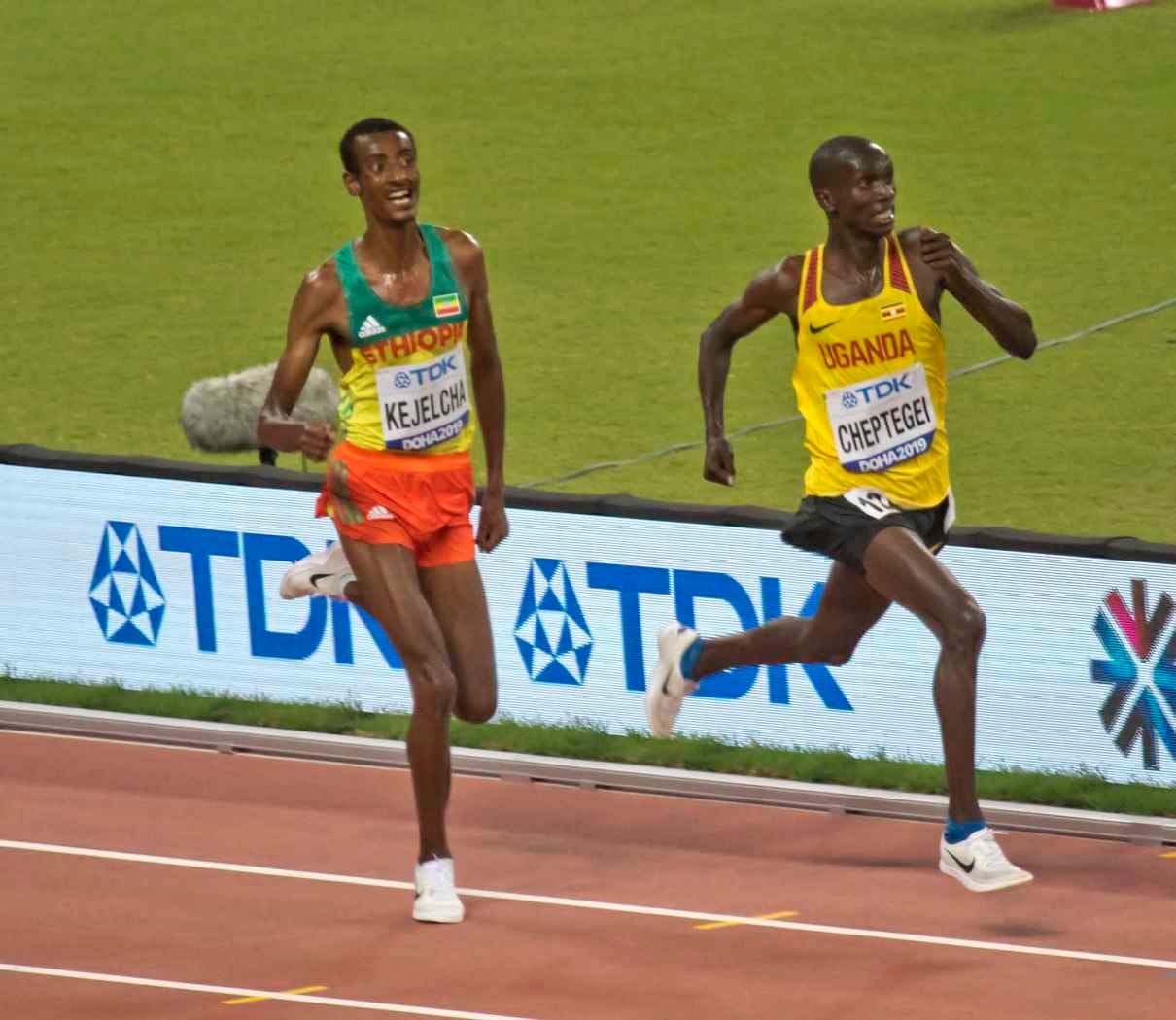
In Birmingham in 2022, with Cheptegei absent, Jacob Kiplimo won the 10,000 m in 27:09.19, another Games record, ahead of Kenya's Daniel Ebenyo and Kibiwott Kandie, and added the 5000 m. Kenya's distance runners, and its kit, are in our history of athletics in Kenya, and Uganda's in the history of athletics in Uganda.
Glasgow 2026, Event by Event
The most recent Games gave the sprints a new name. In heavy rain at Scotstoun, Emmanuel Eseme of Cameroon won the 100 m in 9.83, a national record and a Games record, taking the mark Ato Boldon set in Kuala Lumpur in 1998; Lachlan Kennedy of Australia was second in 9.85, an Oceanian record. On 31 July Sinesipho Dambile ran 19.96 to win the 200 m, the first Commonwealth 200 m title for South Africa.
Australia won 34 athletics medals, 12 of them gold, and topped the athletics table for a third Games in a row. Rose Davies won the 10,000 m and then the 5000 m in 14:44.53, Kurtis Marschall took his third straight pole vault title with a Games record of 5.85 m, and the men's 4 × 100 m relay won Australia's first gold in that event since 1974. Josh Kerr's mile, in front of a home crowd, closed the meeting. In the field, Rumesh Tharanga of Sri Lanka threw 89.75 m to beat India's Neeraj Chopra in the javelin, and Lindon Victor of Grenada won the decathlon with 8096 points ahead of Canada's Damian Warner.
Games records worth knowing, as of October 2026: 9.83 in the men's 100 m (Eseme, 2026), 3:30.12 in the 1500 m (Hoare, 2022), 27:09.19 in the 10,000 m (Kiplimo, 2022) and 22.02 in the women's 200 m, set by Elaine Thompson-Herah in Birmingham in 2022.
National Kit, Without the Union Flag
The house rule for reading any meeting: championships are raced in federation kit, and the Diamond League and the big marathons in sponsor kit. The Commonwealth Games are a championship, so the vests carry national colours, but with one twist. A British athlete who wears the kit of Great Britain & Northern Ireland at the Olympics and the European Championships changes into an England, Scotland, Wales or Northern Ireland uniform here. The Great Britain pieces in our archive, covered in the history of athletics in Great Britain, are Olympic-cycle and World Championship issue, not Commonwealth Games kit.
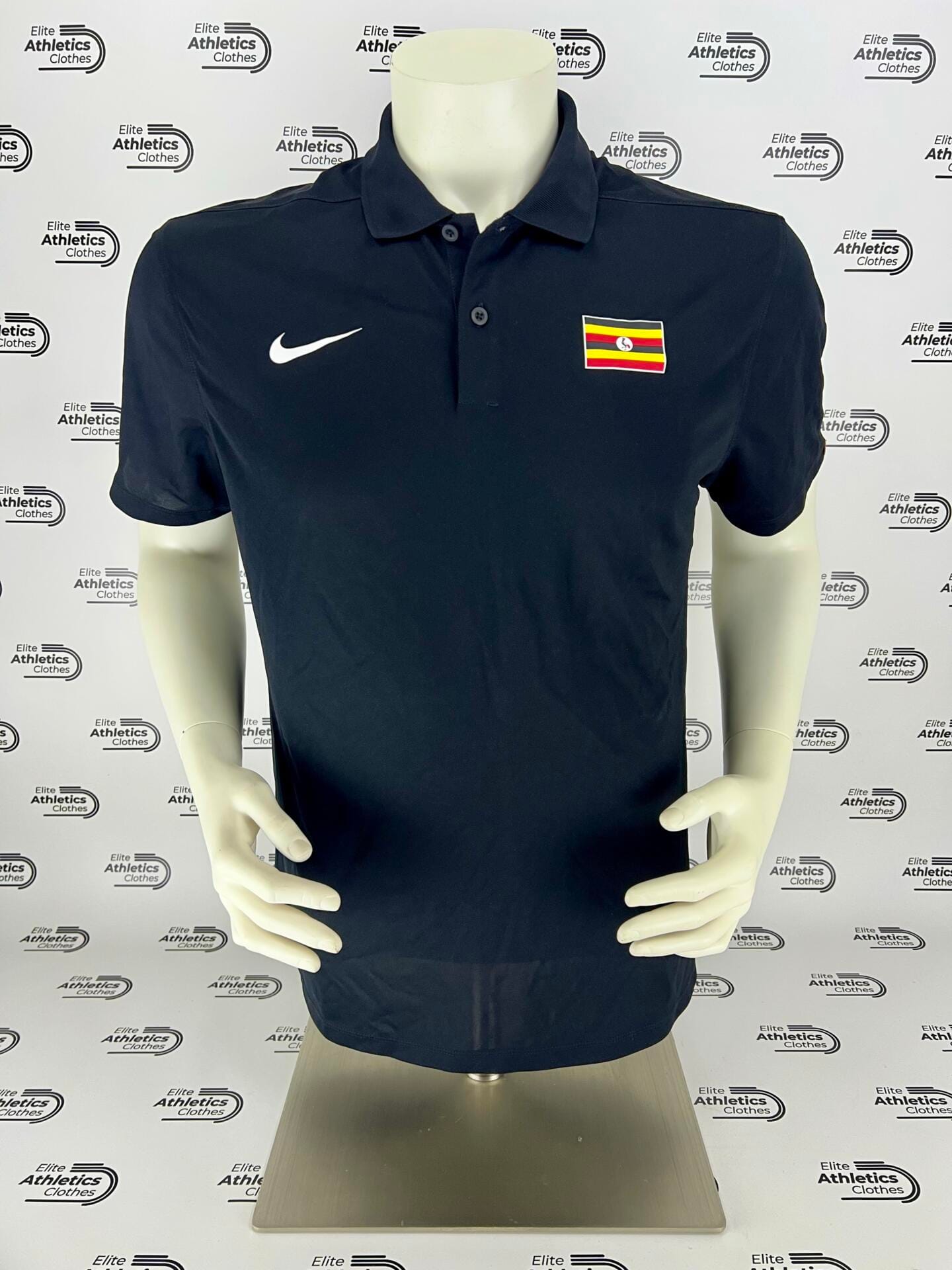 Distance federation · in the archiveNike Uganda Olympic Team Pro Elite 2024 Polo ShirtAthlete-issued Nike kit of the Uganda Olympic team, Paris 2024. Uganda won the men's 10,000 m at every Commonwealth Games from 2006 to 2022.120,00 €View piece →
For the African and other Commonwealth federations the kit is the same national team issue they wear everywhere else. The rail below holds athlete-issued pieces from four of the Commonwealth federations in the archive: Great Britain, including its 2024 Paralympic team, Kenya and South Africa, with Uganda above.
Federation Kit of the Commonwealth
The Commonwealth Games are raced in national colours. These are athlete-issued pieces from Commonwealth federations in the archive — Great Britain's Olympic-cycle kit, its Paralympic team, Kenya and South Africa.
 Nike Great Britain Pro Elite 2019 Storm Jacket180,00 €View Piece →GB · Para
 Adidas Great Britain Paralympics Team Pro Elite 2024 T-Shirt70,00 €View Piece →Kenya
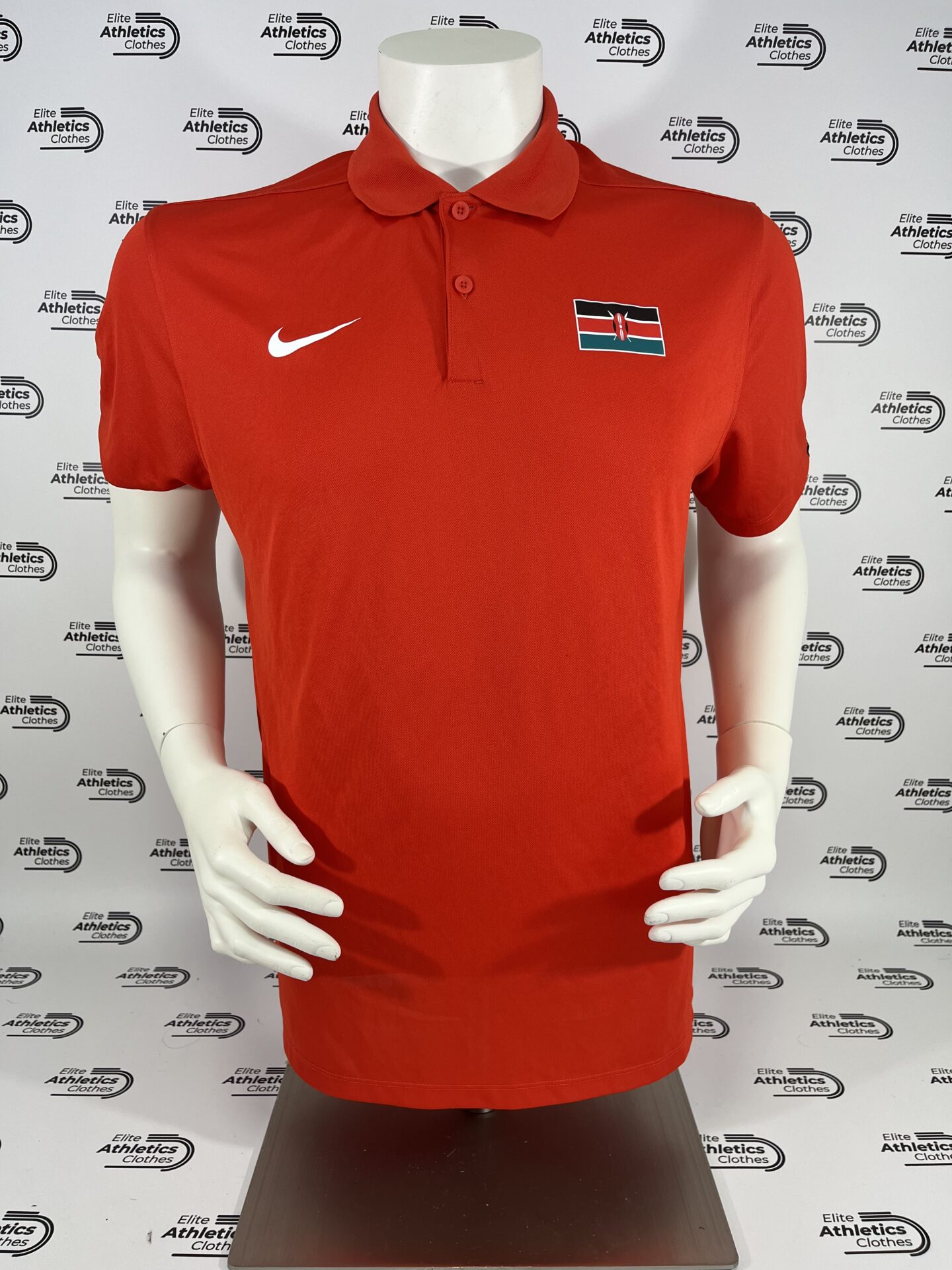 Nike Kenya Olympic Team Pro Elite 2024 Polo Shirt120,00 €View Piece →South Africa
 Adidas South Africa Pro Elite 2019 Women Crop Top120,00 €View Piece →
Where were the 2026 Commonwealth Games held?
In Glasgow, Scotland, from 23 July to 2 August 2026, after Victoria in Australia withdrew as host in July 2023. The Games had ten sports; athletics and para athletics ran from 27 July to 1 August at Scotstoun Stadium.
Who topped the athletics medal table at Glasgow 2026?
Australia, with 34 athletics medals including 12 gold, its third straight win in athletics at the Games. Highlights included Emmanuel Eseme's Games record 9.83 in the men's 100 m and Josh Kerr's win in the mile.
Why is there no Great Britain team at the Commonwealth Games?
Because England, Scotland, Wales and Northern Ireland are separate members of Commonwealth Sport and each sends its own team. British athletes who race together for Great Britain & Northern Ireland at the Olympics compete against each other at the Commonwealth Games.
Has Africa ever hosted the Commonwealth Games?
No. Johannesburg was awarded the 1934 Games, which moved to London, and Durban was awarded the 2022 Games but lost them in March 2017; Birmingham hosted instead. The 23 Games from 1930 to 2026 were held in Canada, Jamaica, the United Kingdom, Australia, New Zealand, Malaysia and India.
When and where are the next Commonwealth Games?
In Ahmedabad, India, in 2030. The city was confirmed as host of the centenary Games at the Commonwealth Sport General Assembly on 26 November 2025, and athletics and para athletics are part of the programme.
Sources and References
- Athletics Australia — Glasgow 2026 campaign review — 34 medals, Davies, Marschall and the 4 × 100 m
- Africanews — Eseme sprints to 100 m gold (Jul 2026) — the 9.83 Games record
- Athletics South Africa — Dambile wins 200 m gold — the 19.96 and South Africa's first 200 m title
- Glasgow 2026 — Kerr emulates Bannister to win Commonwealth Mile — the mile and its return after 1966
- Glasgow 2026 — Fully integrated para sports programme — 47 para medal events
- Commonwealth Sport — Para sports — integration since Manchester 2002
- scottishathletics — Glasgow 2026 athletics to run from July 27 to August 1 — athletics dates and Scotstoun
- World Athletics — Amdavad host city of the 2030 Commonwealth Games — the 2030 award
- The New Daily — Glasgow to host pared-back 2026 Games — Victoria's withdrawal and the smaller Games
- SwimSwam — Durban officially stripped of the 2022 Games — the Durban decision
- Top End Sports — Commonwealth Games host city list — every host since 1930
- Team GB — The Commonwealth Games explained — the home nations as separate teams
- Commonwealth Games Australia — On this day: the Vancouver Miracle Mile — Bannister and Landy, 1954
- World Athletics Heritage — Filbert Bayi recounts his 1500 m world record — Christchurch 1974
- World Athletics — Thompson-Herah, Kiplimo and Richards, Birmingham 2022 — the 22.02 and Kiplimo's double
- World Athletics — Cheptegei and Semenya, Gold Coast 2018 — the 27:19.62
- Athletics Africa — Kiplimo maintains Uganda's 10,000 m run — Uganda's titles since 2006