
Continental
Tour
The circuit of one-day meetings below the Diamond League: four levels, more than 280 meetings in 2026, and a ranking scale that pays 100 points for a Gold win and 28 for a Challenger one.
The World Athletics Continental Tour is the second tier of one-day track and field meetings, below the Diamond League. It has four levels — Gold, Silver, Bronze and Challenger — set by the quality of the field and the prize money, and in 2026 it ran 11 Gold meetings and more than 280 in all, a record.
Each level is a ranking category: Gold is A, Silver B, Bronze C, Challenger D. In the 2026 World Rankings a win scores 100, 70, 42 and 28 placing points respectively, against 140 at a Diamond League meeting. Like every one-day meeting, it is raced in brand kit — the universe our brand shelves collect.
Part of our Competition Files — one competition at a time, explained. The tier above: what the Diamond League is, or jump to the brand lines.
- What it is
- World Athletics' second tier of one-day meetings, below the Diamond League; it replaced the IAAF World Challenge
- Since
- Launched for 2020; first full season 2021; 2026 is the seventh
- Levels
- Gold, Silver, Bronze, Challenger — set by quality of field and prize money
- Size, 2026
- 11 Gold meetings in five areas; 280+ meetings in all, the largest calendar yet
- Size, 2024
- 11 Gold · 41 Silver · 83 Bronze · 133 Challenger; ~20,400 athletes, 193 countries
- Ranking value of a win
- Gold 100 · Silver 70 · Bronze 42 · Challenger 28 placing points (2026); Diamond League meeting 140
- The exception
- The hammer throw at a Gold meeting is scored at Diamond League level (category GW, 140)
- Gold prize pools
- US$15,000 or US$10,000 per event at Gold level (Melbourne 2026)
The Second Tier of One-Day Meetings
The World Athletics Continental Tour is the circuit of one-day track and field meetings that sits directly below the Diamond League. World Athletics announced it in November 2019 to replace the IAAF World Challenge from 2020. The pandemic cut that first year short, so the governing body counts 2021 as the first full season; 2026 is the seventh.
It is organised in four levels: Gold, Silver, Bronze and Challenger. The level depends on two things, the quality of the field and the prize money on offer. Gold meetings are run as a global series with investment from World Athletics. The continental area associations look after the Silver and Bronze meetings in their own regions.
The scale is the point. In 2026 the calendar passed 280 meetings, the largest in the tour's history, with six countries hosting for the first time: Egypt, Ethiopia, Korea, Lesotho, Oman and Saudi Arabia. A later World Athletics count put the total above 290.
Gold, Silver, Bronze and Challenger
The four levels are very different in size. The last full breakdown World Athletics has published, in October 2024, counted 11 Gold meetings, 41 Silver, 83 Bronze and 133 Challenger. That season about 20,400 athletes from 193 countries competed on the tour, against 15,552 from 173 countries in 2023. The Challenger level alone took in 14,010 athletes from 165 countries.
A meeting's level is not always uniform across its programme. At the 2026 Maurie Plant Meet in Melbourne, the season's first Gold meeting, events carried Gold prize pools of US$15,000 or US$10,000, while at least one event, the women's 100 m, was run at Silver level with US$5,000. The organisers put the meeting's total prize money at no less than US$200,000, and the prizes are paid only after doping control clears.
One rule to remember: the label belongs to the event as much as to the meeting. A Gold meeting can hold Silver-level events, and the ranking points follow the level of each event, not the name on the poster.
What a Win Is Worth in the Rankings
For most athletes the tour matters because of the World Rankings, which decide a large share of the places at the Olympics and the World Championships — the mechanics are in our guide to how athletes qualify. Every result earns a performance score, which is a result score for the mark itself plus a placing score for the finishing position, and the placing score depends on the category of the competition.
Each tour level has its own category. Gold is category A, Silver B, Bronze C and Challenger D. In the 2026 table for track and field, a win is worth 100 placing points at a Gold meeting, 70 at Silver, 42 at Bronze and 28 at Challenger. A Diamond League meeting is category GW, 140 for a win in Diamond League events; the Diamond League Final is DF, 170; the Olympics and the World Championships are OW, 260. One event is treated differently: the hammer throw at a Gold meeting is scored as GW, at Diamond League level.
Width: meetings per level in the last official breakdown, published by World Athletics on 1 October 2024 (2026 counts per level are not yet published; the 2026 Gold circuit again has 11). Height: placing score for first place in the 2026 World Rankings table for track and field (5000 m, 10,000 m and steeplechase use their own table). The dashed box on Gold is the hammer throw, scored as category GW at Gold meetings. Hover or tab on a terrace for the detail. Sources: World Athletics press release, 1 Oct 2024; World Athletics World Ranking Rules 2026; Continental Tour Regulations. Verified November 2026.
The Continental Tour levels in numbers — meetings and what a win is worth
| Level | Ranking category | Meetings | Placing score for 1st (2026) |
|---|---|---|---|
| Continental Tour Gold | A | 11 | 100 |
| Continental Tour Silver | B | 41 | 70 |
| Continental Tour Bronze | C | 83 | 42 |
| Continental Tour Challenger | D | 133 | 28 |
| Continental Tour Gold, hammer throw | GW | — | 140 |
| Diamond League meeting (DL events) | GW | 14 in 2026 | 140 |
| Diamond League Final | DF | 1 | 170 |
| Olympic Games / World Championships | OW | — | 260 |
Read the terraces from left to right and the trade-off is plain. There were twelve Challenger meetings for every Gold one, and a Challenger win is worth less than a third of a Gold win. The top of the tour is narrow and steep; the floor is wide and low, and it is where most of the sport's athletes actually compete.
The scale moved in 2026. From 1 January World Athletics lowered placing scores by about 30 per cent across all events and categories: a Gold-meeting win was worth 140 placing points under the 2024 table and is worth 100 now. Comparisons with older ranking scores need that correction.
How It Differs From the Diamond League
The Diamond League is a closed series: 14 points meetings in 2026, from Doha on 8 May to Zurich on 27 August, and a final in Brussels on 4 and 5 September. Its meetings carry the higher GW category in the Diamond League disciplines and a fixed programme of events. The Continental Tour is open in the other direction — hundreds of meetings, set by level, spread over every continent and most of the year.
The hammer is the clearest example of the split. It was the one track and field event left off the Diamond League programme when the series began in 2010, and the Gold meetings became its home on the one-day circuit; a Gold-meeting hammer win is scored at GW. The last Gold meeting of 2026 was the Gyulai István Memorial in Budapest on 14 July; two months later the same city stages the first World Athletics Ultimate Championship.
The 2026 Gold Circuit
The eleven Gold meetings of 2026, in the order World Athletics published them in March:
- 27–28 Mar · Maurie Plant Meet, Melbourne
- 24 Apr · Kip Keino Classic, Nairobi
- 17 May · Golden Grand Prix, Tokyo
- 29 May · Irena Szewińska Memorial, Bydgoszcz
- 3 Jun · Paavo Nurmi Games, Turku
- 6 Jun · USATF Lone Star Grand Prix, College Station
- 13–14 Jun · USATF LA Grand Prix, Los Angeles
- 16 Jun · Ostrava Golden Spike, Ostrava
- 21 Jun · FBK Games, Hengelo
- 26 Jun · Boris Hanžeković Memorial, Zagreb
- 14 Jul · Gyulai István Memorial, Budapest
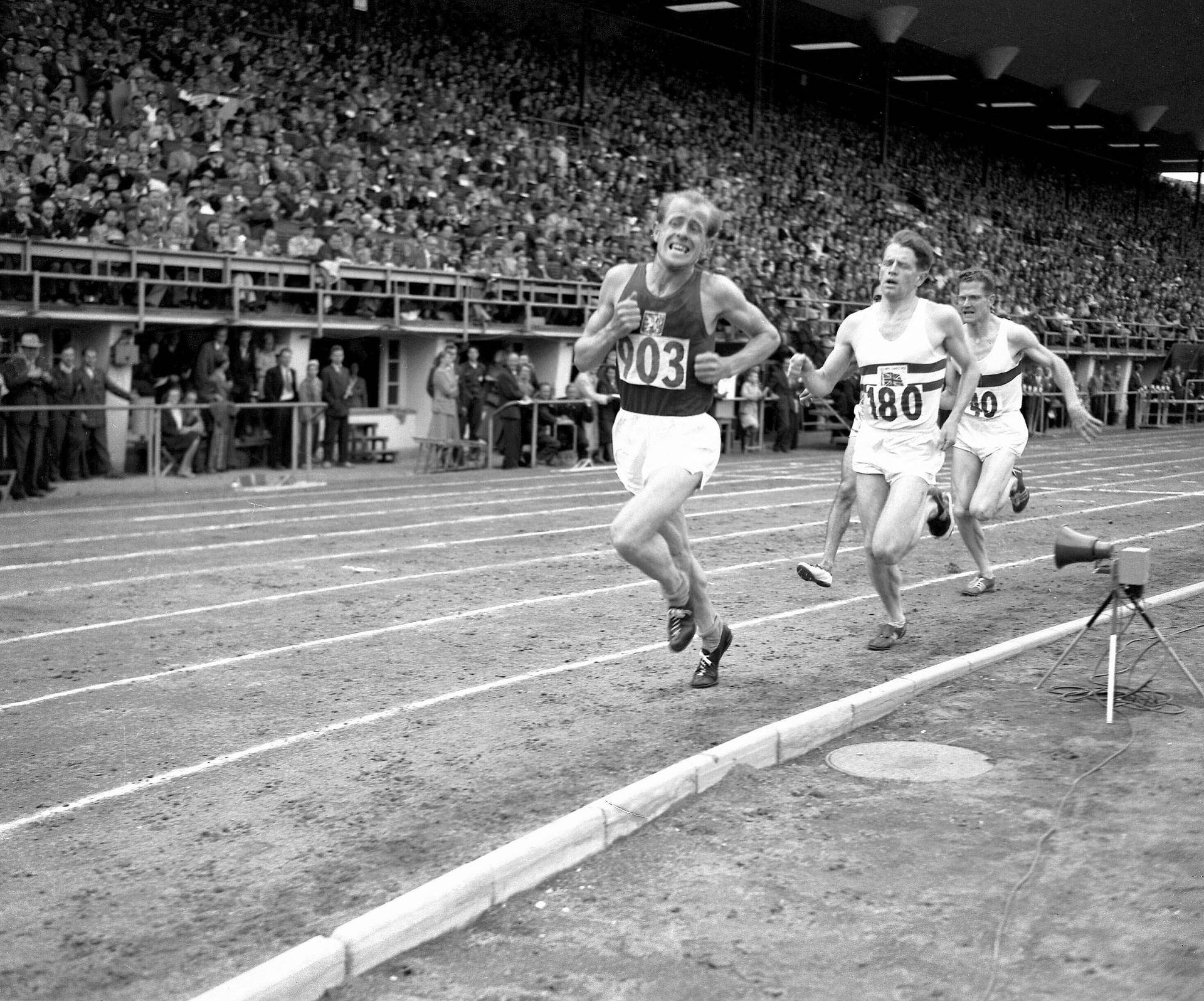
Several carry names from the history of the sport. The Paavo Nurmi Games in Turku are named after the Finnish runner covered in our history of athletics in Finland. The FBK Games in Hengelo honour Fanny Blankers-Koen, who won four golds at London 1948 — she leads the history of Dutch athletics. Ostrava's Golden Spike has been held since 1961, and in 2022 World Athletics gave it and Emil Zátopek a joint Heritage Plaque; the Czech story starts with him. Nairobi's Kip Keino Classic is the Kenyan entry, and Bydgoszcz the Polish one.
The hammer ran through the 2026 season. At the Kip Keino Classic on 24 April, Camryn Rogers of Canada, the Olympic champion, threw 80.03 m, an African all-comers record, and Ethan Katzberg won the men's event with a world-leading 82.43 m; Gabby Thomas ran a world-leading 21.89 in the 200 m the same evening. In Turku on 3 June Rogers threw 80.09 m with her last attempt, one of eight meeting records that night.
Her best throw of the year came lower down the ladder. On 2 April, at the Texas Relays in Austin — a Challenger-level meeting — Rogers threw 81.13 m, a North American record. Only Anita Włodarczyk, with her 82.98 m world record from 2016, has thrown further. The bottom terrace of the tour can still hold the season's biggest mark.
Brand Kit on the One-Day Circuit
The house rule for reading any competition: championships mean federation kit, and meetings mean brand kit. On the Continental Tour, as on the Diamond League, athletes race in the uniforms of their shoe contracts and their clubs, not in national colours. That is the universe our brand shelves collect — Nike Pro Elite, adidas Pro Elite, the NN Running Team, Rosa & Co. and Asics Pro Elite.
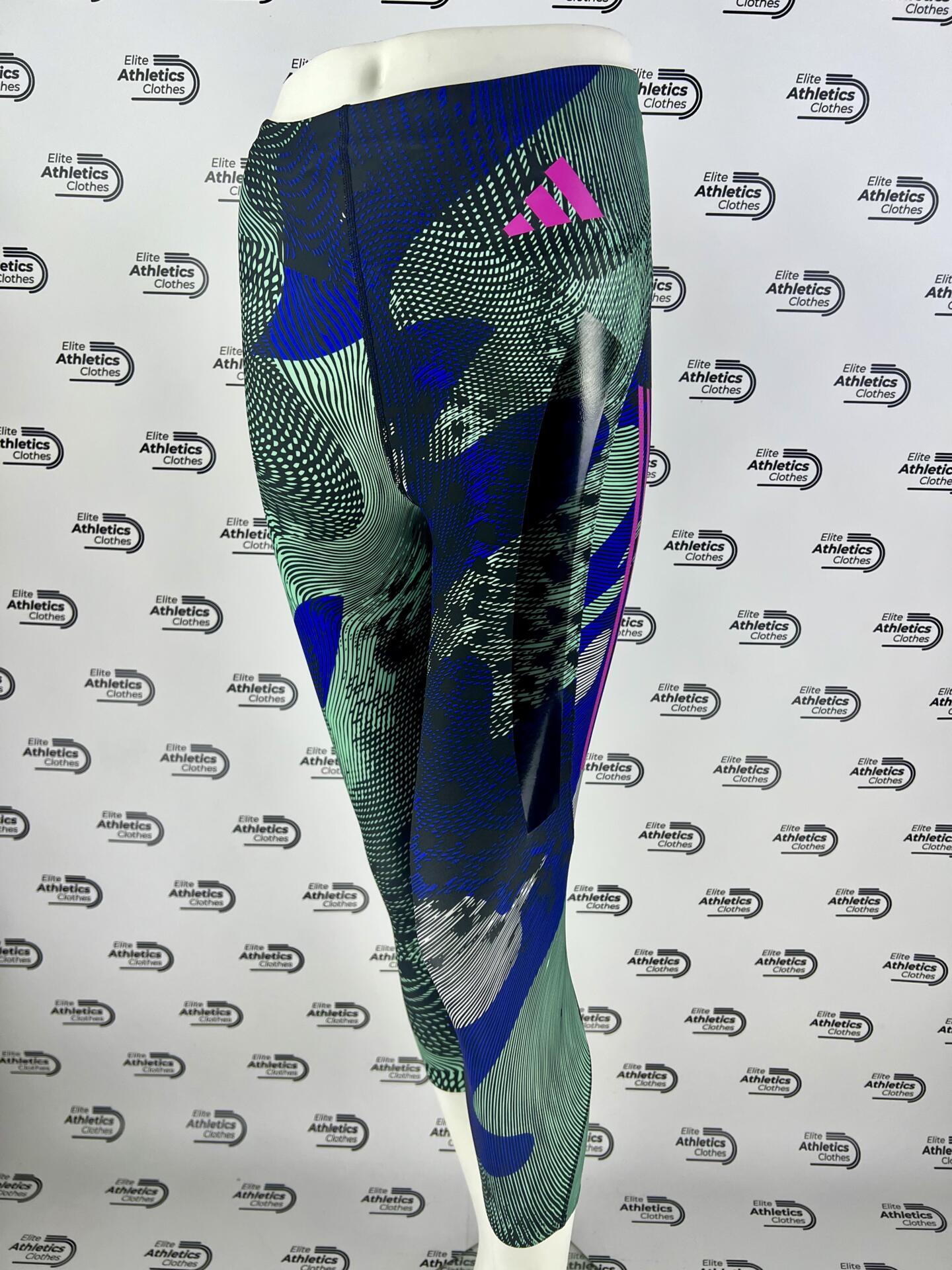 Team kit · in the archiveAdidas Pro Elite Team 2023 Women Capri Long TightsAthlete-issued adidas Pro Elite team kit from the 2023 cycle — the kind of trade uniform that fills the start lists of the one-day circuit, where nobody races in national colours.140,00 €View piece →
These pieces come out of the team channel in small numbers, which is why each line has its own page here and why the rail below holds one athlete-issued piece from four of them.
The Uniforms of the One-Day Circuit
Continental Tour meetings are raced in trade kit, not national kit. These are athlete-issued pieces from four of the brand lines behind the one-day circuit, next to the adidas piece above.
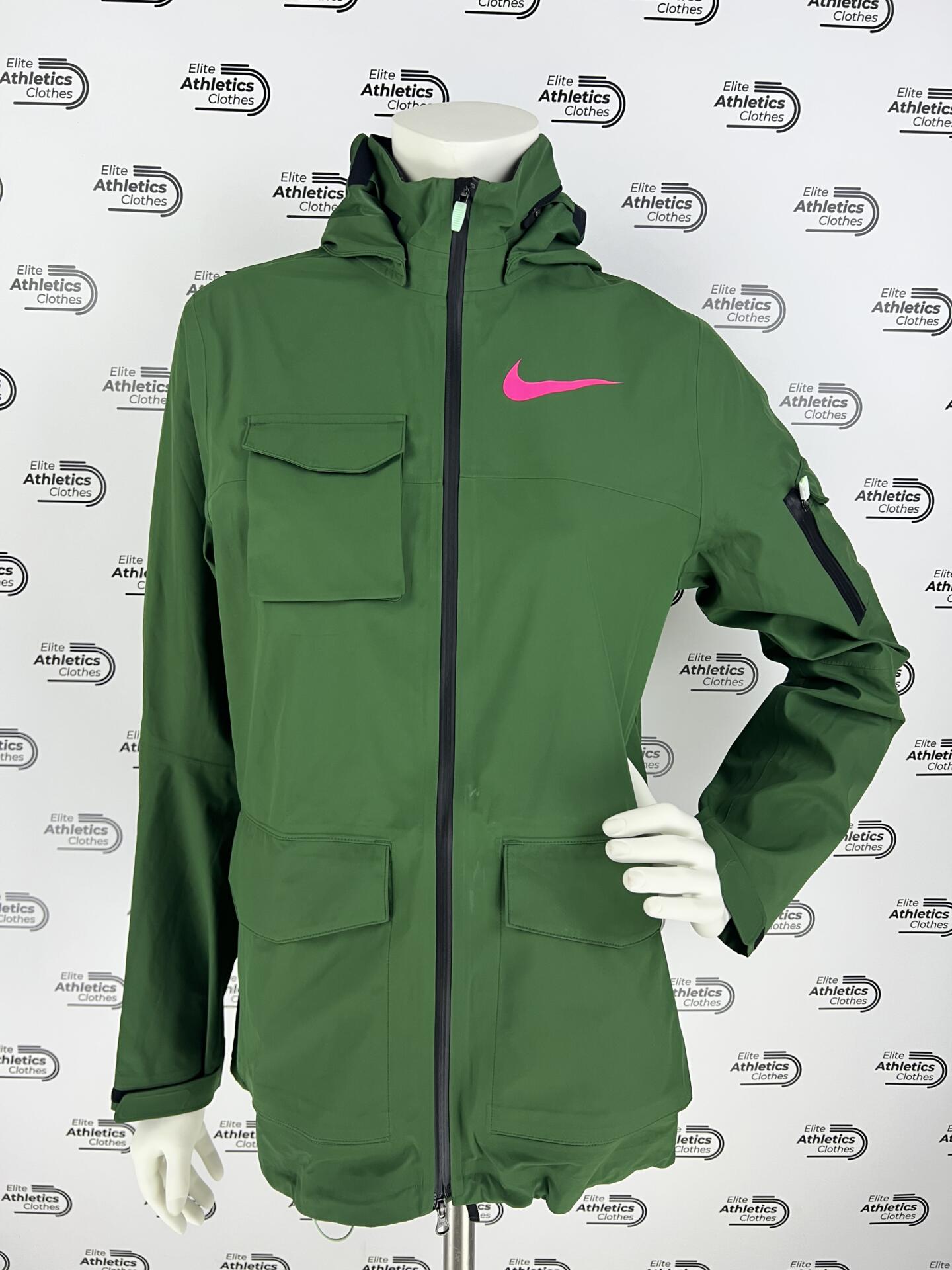 Nike Pro Elite 2023 Women Storm Fit Jacket150,00 €View Piece →NN Running
 Nike NN Running Team Pro Elite 2024 Racing Shorts180,00 €View Piece →Rosa & Co.
 Nike Rosa & Co. Pro Elite 2024 Running Shorts180,00 €View Piece →Asics
 Asics Pro Elite 2024 Team Women Crop Top – Yellow Edition90,00 €View Piece →
What is the World Athletics Continental Tour?
It is the second tier of one-day track and field meetings, below the Diamond League. World Athletics launched it for 2020 to replace the IAAF World Challenge. It has four levels, Gold, Silver, Bronze and Challenger, and in 2026 its calendar passed 280 meetings, with 11 at Gold level.
What is the difference between Gold, Silver, Bronze and Challenger meetings?
The level is set by the quality of the field and the prize money. Gold meetings are run as a global series with World Athletics investment; the continental area associations manage Silver and Bronze. Each level is a World Rankings category: Gold A, Silver B, Bronze C, Challenger D.
How many ranking points does a Continental Tour win earn?
Under the 2026 World Rankings table for track and field, first place earns a placing score of 100 at Gold, 70 at Silver, 42 at Bronze and 28 at Challenger, added to the result score for the mark. A Diamond League meeting win earns 140. The hammer throw at a Gold meeting is scored at 140.
How is the Continental Tour different from the Diamond League?
The Diamond League is a closed series of 14 points meetings and a final, in Brussels in 2026, scored in the higher GW category. The Continental Tour is a much larger, tiered circuit of hundreds of meetings across every continent, scored from category A at Gold down to D at Challenger.
Which meetings were Continental Tour Gold in 2026?
Eleven: Melbourne, Nairobi (Kip Keino Classic), Tokyo, Bydgoszcz, Turku (Paavo Nurmi Games), College Station, Los Angeles, Ostrava (Golden Spike), Hengelo (FBK Games), Zagreb and Budapest (Gyulai István Memorial), from 27 March to 14 July.
Sources and References
- World Athletics — Continental Tour expands for biggest-ever season (11 Mar 2026) — the four levels, 11 Gold meetings, 280+ meetings and the new hosts
- World Athletics — 2024 the biggest year yet for the Continental Tour (1 Oct 2024) — meetings per level, athletes and countries, first full season 2021
- World Athletics — Continental Tour to launch in 2020 (23 Nov 2019) — the launch and the World Challenge it replaced
- World Athletics — World Ranking Rules 2026: track and field events — categories and placing scores
- World Athletics — World Ranking Rules 2026: overall rankings — the 2026 reduction of placing scores
- World Athletics — World Ranking Rules 2024: track and field events — the 2024 placing scores
- World Athletics — Continental Tour Regulations (Book C, C1.4) — Gold = category A, hammer = GW, prize levels
- Olympics.com — 2026 outdoor season full schedule — the 2026 Gold list and dates
- Athletics Australia — Maurie Plant Meet 2026 athlete prize money — Gold and Silver event pools
- World Athletics — Diamond League calendar 2026 (21 Oct 2025) — 14 meetings and the Brussels final
- World Athletics — Rogers, Thomas and Pathirage break meeting records in Nairobi (24 Apr 2026) — the Kip Keino Classic marks
- World Athletics — Rogers throws beyond 80 metres in Turku (3 Jun 2026) — the 80.09 and the eight meeting records
- World Athletics — Rogers sets North American hammer record in Austin (2 Apr 2026) — the 81.13 at the Texas Relays
- World Athletics Heritage — Emil Zátopek & Golden Spike — the 2022 Heritage Plaque